
The hospitality industry in Singapore has always run on people. A warm check-in. A waiter who remembers your preference. A manager who can read a difficult table from across the room.
AI doesn’t replace any of that. But it’s changing who has time for it.
Service leaders who are still spending their mental energy on scheduling, shift reports, briefing notes, and guest complaint logs — they’re the ones showing up to their teams half-present. The admin has eaten their actual job. And their teams feel it.
Here’s what we’re seeing at QD Academy after working with hospitality professionals across Singapore: the teams that are thriving right now aren’t the ones that have automated the most. They’re the ones whose managers got their attention back. Used the freed-up hours to lead better, coach more, and show up fully for their people.
That’s the real story of AI in service leadership. Not robots replacing waitstaff. Managers finally having the headspace to actually manage.
What AI Is Actually Doing to the Singapore Hospitality Job Market
The Singapore job market in food and beverage and hotel operations has been tight for years. Staffing challenges, high turnover, and a workforce that’s increasingly looking for managers who lead with intention — not just instructions.
MOM’s 2025 employment data shows hospitality roles aren’t disappearing. They’re shifting. Operational tasks that used to consume a supervisor’s morning are now handled faster with AI-assisted tools. What that creates isn’t a smaller workforce — it’s a wider expectation gap between leaders who’ve adapted and those who haven’t.
The Singapore AI Strategy is clear about this: AI adoption needs to happen at team level, not just enterprise level. For hospitality, that means the expectation is no longer reserved for executives with a digital transformation budget — it sits with the floor supervisor who runs the morning briefing, the outlet manager who handles rostering, and the team lead who writes the daily handover. AI-powered productivity isn’t a corporate initiative. It’s a frontline skill.
The good news is the learning curve is shorter than most managers expect. Tools like ChatGPT, Claude, and Microsoft Copilot are designed to be used without technical training — and once a service leader learns how to prompt well, automate admin work with AI, and use AI for meeting notes, the time savings show up within the first week. The harder shift isn’t technical. It’s permission — giving yourself permission to work differently, and bringing your team along with you.
This isn’t abstract. It’s showing up right now in hiring decisions, team performance reviews, and the career switch Singapore choices people are making. Service leaders who can’t operate in an AI-supported environment are finding that promotions are going elsewhere.
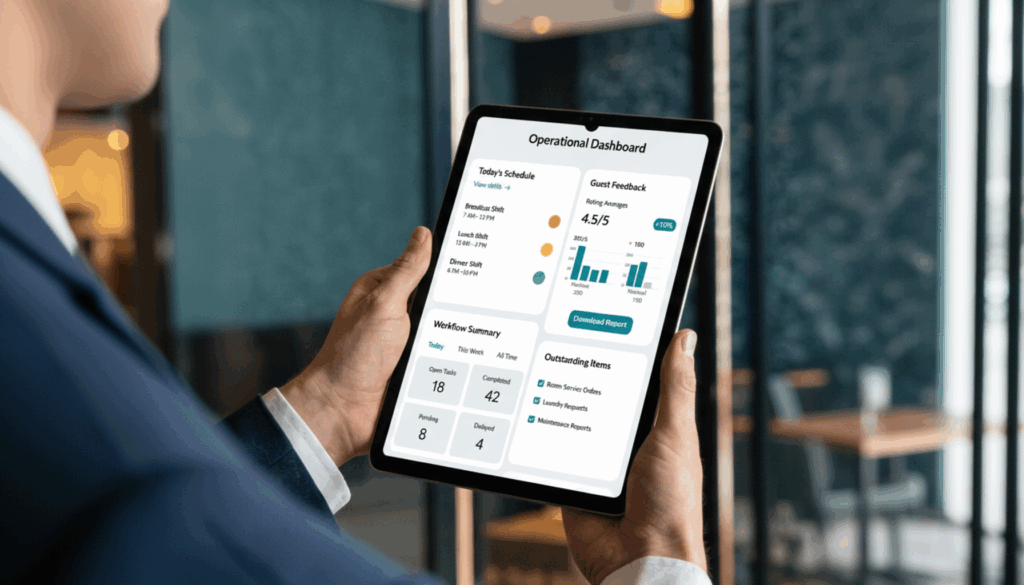
The Leadership Blind Spot Most Hospitality Managers Don’t Know They Have
There’s a gap that shows up again and again in service teams. It doesn’t look like a technology problem — it looks like a communication problem, or a team dynamics problem, or a “my staff just don’t listen” problem.
But underneath most of those complaints is a leadership style mismatch that nobody named.
Some managers lead by high standards and direct feedback. Others by team harmony and relationship-building. Some need to understand the why before they commit; others move fast on instinct and get frustrated when their team doesn’t keep up. These aren’t personality flaws. They’re patterns — and when you don’t understand them, they create friction that no amount of operational efficiency can fix.
The Enneagram is one of the most useful frameworks for making this visible. Not as a personality quiz you do once and forget. As a working model that helps leaders understand why their natural style works brilliantly with some team members, and creates tension with others.
One participant who went through QD Academy’s Enneagram Leadership course put it plainly: she’d managed a hotel F&B team for seven years and thought she understood her people. After the course, she realised she’d been reading half the team wrong the entire time. Not because she wasn’t perceptive — because she’d never had a framework that showed her the blind spots in her own style.
That’s the leadership gap AI can’t close. And it’s the one most hospitality leaders are sitting with right now.
How to Automate Admin Work with AI: A Practical Guide for Service Leaders
Here’s what AI-powered productivity in a hospitality leadership context actually looks like — not in theory, but in the daily workflows that are shifting right now. The first question most managers ask is: which tool should I actually use?
ChatGPT vs Claude vs Gemini for Work — What Hospitality Managers Need to Know
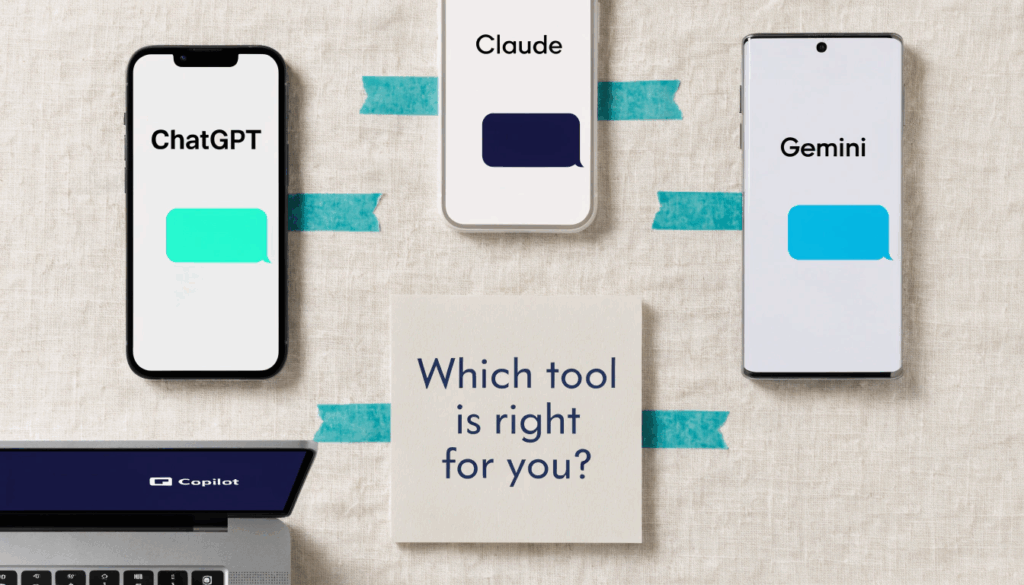
If you’ve been wondering about ChatGPT vs Claude vs Gemini for work, you’re not alone. The honest answer is they’re more similar than the marketing suggests — but the differences matter for specific tasks.
ChatGPT (including Microsoft Copilot, which runs on the same underlying technology) is deeply integrated into Microsoft 365, making it the strongest choice if your operation runs on Outlook, Teams, or Excel. Microsoft Copilot vs ChatGPT is less an either/or question and more a question of where you’re already working — Copilot is ChatGPT built into the tools you’re already using.
Claude tends to produce longer, more nuanced written output — better for drafting staff communications, policy documents, or training materials where tone matters.
Gemini (Google’s AI) integrates directly with Google Workspace — useful if your team lives in Google Docs, Gmail, and Sheets.
For most hospitality managers, the entry point is simple: pick one, learn how to use ChatGPT at work (or Claude, or Gemini), and get consistent with it before adding more tools. The productivity gains come from habit, not variety.
The Best AI Tool for Writing Emails
One of the highest-ROI applications for any manager is using AI as the best AI tool for writing emails. This isn’t about letting AI replace your voice — it’s about cutting the time you spend staring at a blank screen for routine communications.
Shift reminders. Feedback follow-ups. Supplier queries. Guest complaint responses. These are not communications that require your full creative energy every time. A well-crafted prompt gets you 80% of the way there in 30 seconds. You spend your energy on the 20% that requires actual judgment.
AI for Meeting Notes Singapore
AI for meeting notes is one of the fastest-adopted use cases we see among Singapore’s service managers. Tools like Otter.ai, Fireflies, or even a simple ChatGPT voice-to-text workflow can turn a 45-minute team briefing into a structured action list in minutes — with owners, deadlines, and follow-up items already separated out.
For hospitality managers running daily pre-service briefings or weekly ops meetings, this alone can save 3–5 hours a week across the team.
AI Prompts for Office Productivity
The difference between managers who get real value from AI and those who don’t usually comes down to AI prompts for office productivity. Most people type a vague instruction and get a vague result. The managers seeing genuine time savings have learned to prompt specifically — with context, format requirements, and tone guidelines built in.
This is a learnable skill. It’s also one of the core modules in QD Academy’s AI-Powered Productivity course.
Briefing and Handover Notes
Managers at shift-heavy operations spend significant time writing or reading handover notes. Using how to automate admin work with AI principles, they can draft structured summaries from voice recordings in minutes. What used to take 20 minutes now takes 5 — and the quality is more consistent.
Guest Feedback Analysis
Instead of manually reviewing review platforms or customer feedback forms, tools like ChatGPT or Google Gemini can batch-process and categorise sentiment by theme in minutes. A manager who used to spend an hour monthly on this now gets a usable summary in the time it takes to make a coffee.
Schedule Optimisation
Several hospitality operators in Singapore are now using AI-assisted workflow automation tools to forecast demand and build shift schedules. It doesn’t replace the manager’s judgment — especially when staff welfare and preferences matter — but it cuts the initial planning time significantly.
None of these tools remove the need for a good leader. They just remove the administrative layer that was preventing good leaders from leading.
Why Self-Awareness Is the Skill AI Cannot Replicate
In a 2024 Korn Ferry study of leaders across industries, self-awareness consistently ranked as the strongest differentiator between high-performing and average leaders — above IQ, technical skill, and industry experience.
In hospitality, this is even more acute. A leader who doesn’t understand their own stress responses will create environments of quiet pressure that staff eventually leave. A leader who can’t separate their personal standards from their team’s capabilities will consistently over-manage and under-develop.
The Enneagram framework addresses this directly. Each of the nine Enneagram types has characteristic strengths under normal conditions — and characteristic patterns of reactivity under pressure. For a service leader managing a team through a difficult Saturday night service, knowing which version of yourself tends to show up under stress isn’t soft knowledge. It’s operational.
This is the part of leadership development that SkillsFuture Singapore has been quietly championing through its funding for professional skills courses — the recognition that technical upskilling and human capability development need to happen together, not in sequence.
When we combine Enneagram-based leadership coaching with practical AI tool training, what participants report isn’t just new skills. It’s a different relationship with their work. Less reactive. More intentional. Present in the ways that actually matter for their teams.
The Mid-Career Picture: Why Service Leaders Are Upskilling Now
Mid-career switch in Singapore hospitality doesn’t always mean leaving the industry. Sometimes it means moving from an operational role into a people leadership or training function — and realising that neither AI skills nor leadership frameworks were ever formally taught.
For working professionals looking at an AI-powered productivity course or a ChatGPT course Singapore SkillsFuture, the challenge is finding something that combines both — tools and judgment, not just one or the other. That’s specifically what QD Academy’s programmes are designed around: AI-powered productivity that actually fits into how hospitality professionals work, combined with the Enneagram leadership framework that explains why teams behave the way they do.
SSG-funded courses are filling that gap. The SkillsFuture Enterprise Credit (SFEC) — which expires in June 2026 — allows eligible employers to offset up to $10,000 of workforce training costs, with no cap on the number of employees trained. For hospitality SMEs, this is significant: it means getting your supervisors and floor managers into leadership development and an AI course for working professionals Singapore at minimal cost to the business.
SSG funding through SkillsFuture subsidises up to 70% of course fees for Singaporean citizens and PRs, with the Mid-Career Enhanced Subsidy pushing that to 90% for participants aged 40 and above. NTUC members can also stack UTAP (Union Training Assistance Programme) on top for additional rebates.
For a service leader looking at their career in hospitality and wondering whether they’re building the right skills for the next decade — the funding mechanisms are there. The question is whether to act before both SFEC and the window closes.
What Hospitality Teams Actually Need from Their Leaders Right Now
Here’s an honest observation from the training room: most hospitality teams already know what good leadership looks like. They’ve experienced enough bad versions to articulate the gap clearly.
They want managers who are present — not distracted by admin. They want feedback that’s specific and fair, not just reactive after something goes wrong. They want to understand what’s expected of them, given clearly, not assumed.
AI handles the first item — once managers learn to actually use it. Enneagram-based leadership development handles the second and third. Used together, they change what a service leader’s week actually looks like.
The hospitality teams that are going to retain good people in Singapore over the next three years won’t do it through perks. They’ll do it through the quality of their managers. That’s what the data keeps showing — and it’s what participants in QD Academy’s leadership programmes keep confirming, long after the course ends.
Ready to Lead With Clarity?
QD Academy’s Effective Service Leadership with Enneagram (9-10July | offline) and AI-Powered Productivity – Strategies for the Modern Workplace (25 June | online) programmes are built for exactly this moment — when hospitality managers in Singapore need both the human skills and the AI skills to lead well.
It’s SSG-funded, practically focused, and delivered by facilitators who’ve worked with real service teams in Singapore. Your SFEC offset can cover a significant portion of the cost — but that window closes in June 2026.
Register now | WhatsApp Tiana at +65 8986 6799 for a quick chat about which programme fits your team.
Frequently Asked Questions
What is service leadership and why does it matter in hospitality?
Service leadership means leading a team in a way that prioritises both operational excellence and the human experience of the people doing the work. In hospitality, where staff turnover is high and customer experience is everything, the quality of leadership directly determines both. AI-powered productivity tools help service leaders free up the time and headspace to actually lead — while frameworks like the Enneagram help them understand how to lead each person on their team more effectively.
ChatGPT vs Claude vs Gemini — which is best for hospitality managers?
All three are capable general-purpose AI tools. ChatGPT and Microsoft Copilot are strongest for Microsoft 365 users. Claude tends to produce better long-form written content. Gemini integrates well with Google Workspace. For most hospitality managers starting out, the best tool is whichever one you’ll actually use consistently. Start with one, build the habit of using AI prompts for office productivity, then expand.
How can I use AI for meeting notes in Singapore?
Tools like Otter.ai, Fireflies, or ChatGPT’s voice input can transcribe and summarise briefings, team meetings, and handover conversations automatically. Most take under 5 minutes to set up and require no technical knowledge. AI for meeting notes Singapore is one of the core modules covered in QD Academy’s AI-Powered Productivity course.
What is the Enneagram and how does it help hospitality leaders?
The Enneagram is a nine-type personality framework that maps core motivational patterns — each with distinct strengths, stress responses, and communication styles. For hospitality leaders, it explains why certain team dynamics keep breaking down, and what adjustments in management style can fix them. It’s not therapy. It’s a working tool for self-aware, effective leadership.
Is there a SkillsFuture-funded AI productivity course for hospitality professionals in Singapore?
Yes. QD Academy’s AI-Powered Productivity course is SSG-funded and designed specifically for working professionals in Singapore — including hospitality managers. It covers practical AI tools, prompt writing, workflow automation, and email and meeting productivity. SSG funding covers up to 70% of fees for eligible Singaporeans and PRs, and up to 90% through the Mid-Career Enhanced Subsidy for those aged 40+. SFEC (expiring June 2026) can be stacked on top by eligible employers.
Can mid-career hospitality professionals upskill without leaving their jobs?
Yes. QD Academy courses run in modular formats that fit around full-time work. The career transition program pathways through SkillsFuture are specifically designed for professionals upskilling in-role — not just between jobs.